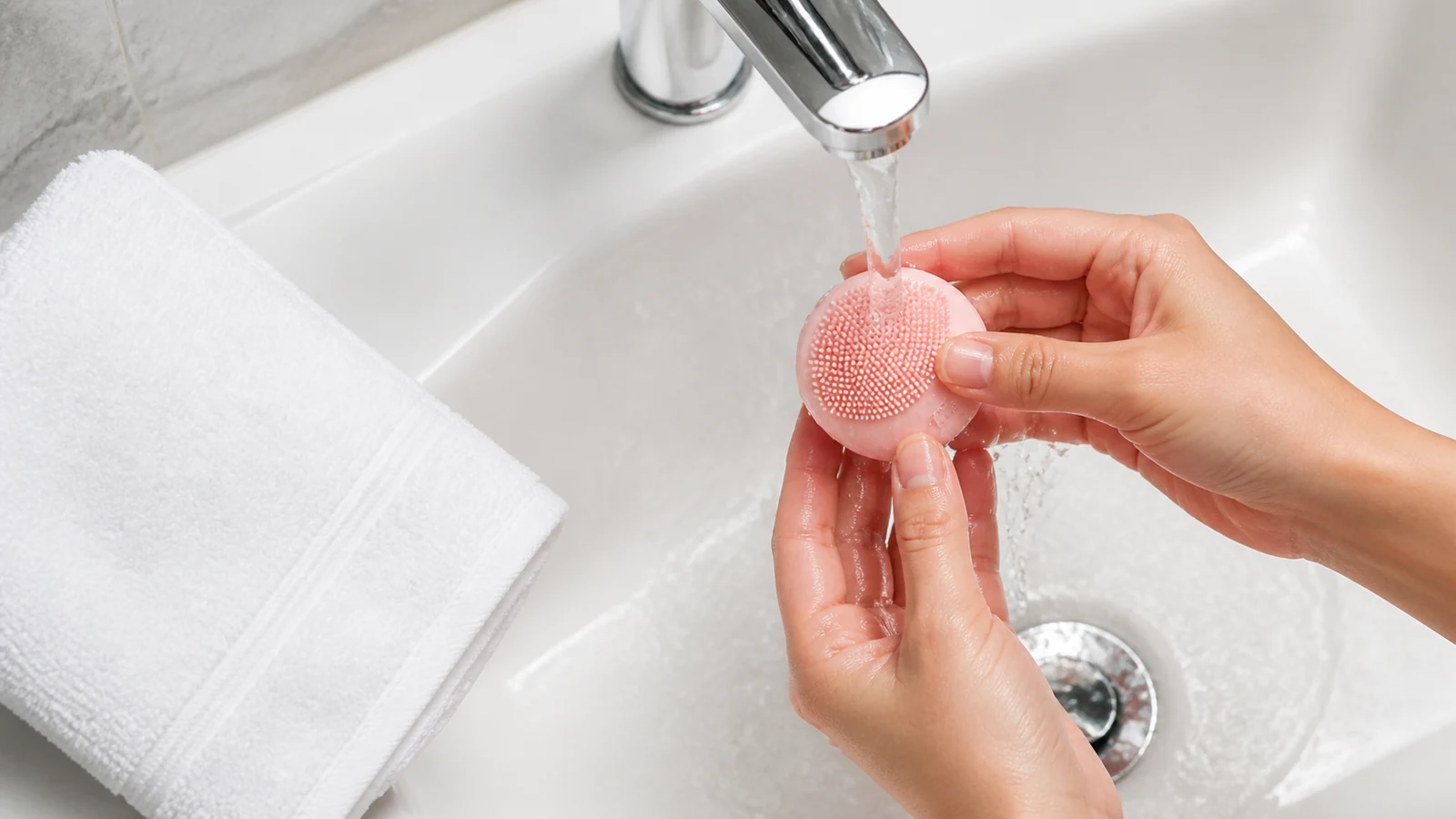
How To Rinse The MIAOFUTONG Built-In Brush
Direct answer: rinse a silicone facial cleansing brush thoroughly after every use, loosen any residue with clean fingers, shake off water and leave it somewhere with airflow until dry. A weekly deeper clean with mild soap or cleanser is sensible for many routines, but avoid harsh solvents unless your specific manufacturer says otherwise.
After every cleanse
- Rinse the brush head under warm running water until foam, oil and makeup residue are gone.
- Use clean fingertips to move between the silicone tips; do not scrape with sharp tools.
- Shake off excess water and place the brush where air can reach the head.
- Only recap or pack it once it is dry enough not to trap moisture.
This matches the practical direction in ScrubMe's silicone face-scrubber cleaning guide, which stresses rinsing after use and avoiding damp storage.
Weekly deeper clean
For a deeper clean, use mild soap and water, rinse thoroughly and dry with a clean towel or open-air drying. FOREO's cleansing brush care guidance advises washing brush surfaces with water and soap and avoiding alcohol or acetone cleaners. Real Simple's silicone beauty-tool cleaning advice also points readers towards mild soap, rinsing and drying.
Storage mistakes to avoid
- Leaving dried cleanser in the bristles because the head looked clean from a distance.
- Putting a wet brush into a sealed wash bag before work or travel.
- Leaving the head sitting in pooled shower water.
- Assuming silicone means no cleaning is needed.
When to replace or stop using it
Replace the brush or stop using the brush head if the texture tears, the tips feel rough, residue will not rinse away, or an odour remains after proper cleaning. If the issue is skin comfort rather than hygiene, compare your technique with the built-in brush guide.