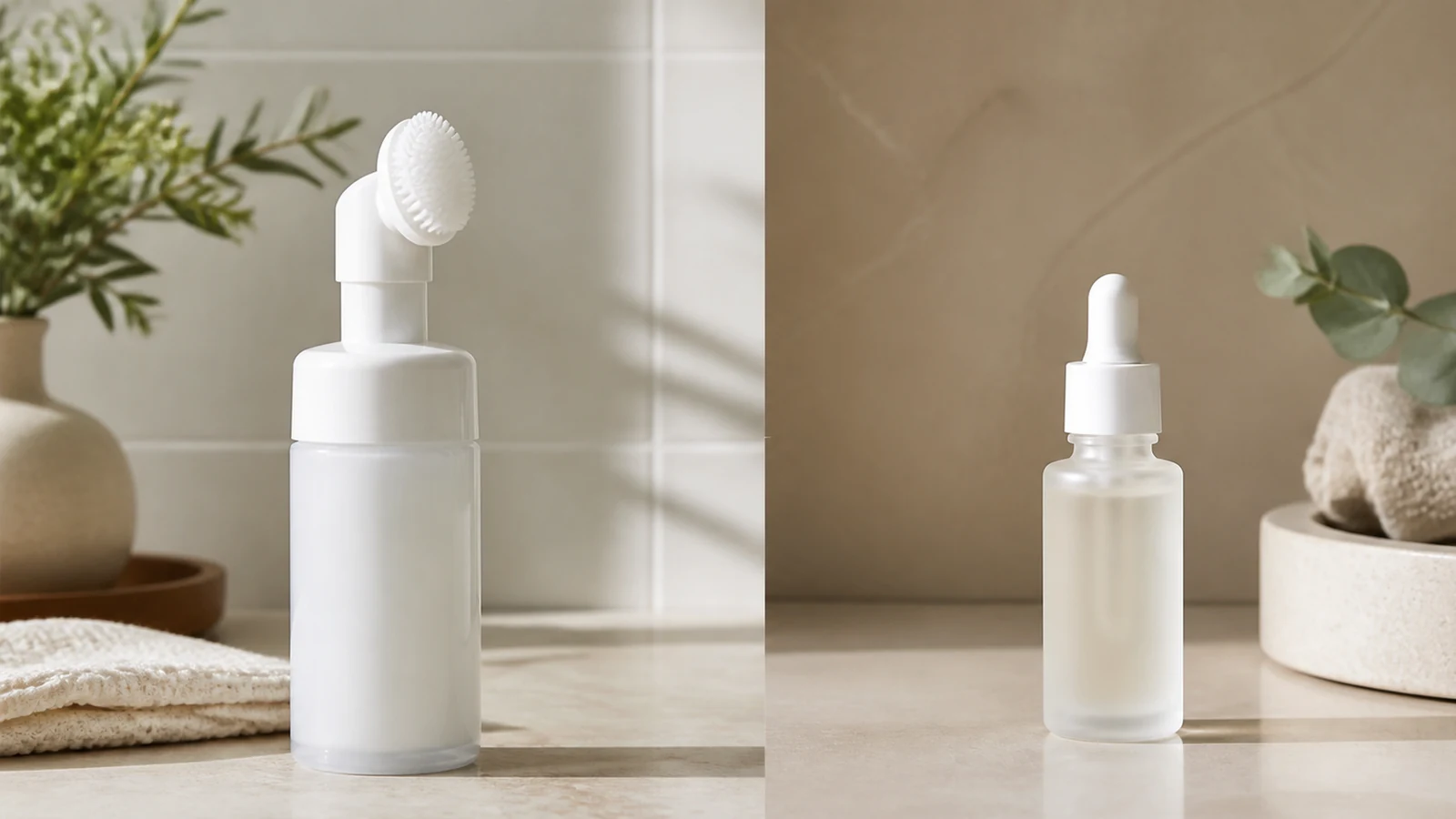
Rinse-Off Vs Leave-On Brightening Uk
Direct answer: choose a rinse-off brightening cleanser when your priority is cleansing comfort, convenience and a lower-commitment routine. Choose a leave-on active when your priority is longer contact time for an appearance-led brightening step. Neither format should be treated as a cure for persistent pigmentation, and both need sensible patch testing and daytime SPF.
Decision table
| Factor | Rinse-off cleanser | Leave-on active |
|---|---|---|
| Contact time | Short; usually seconds to a minute. | Longer; remains on skin until the next wash or routine step. |
| Best fit | Daily cleansing, comfort and simple routines. | Targeted cosmetic routine steps for tone or texture appearance. |
| Main risk | Over-scrubbing or expecting too much from a wash. | Layering too many actives or irritating the skin barrier. |
| Complexity | Lower. | Higher; needs more careful sequencing. |
Patch testing still matters
Wash-off does not mean risk-free. Medik8's patch testing guidance distinguishes wash-off cleanser testing from leave-on testing and uses a short contact-and-rinse method, which is a useful reminder that cleansers still touch skin directly.
What pigmentation sources suggest
DermNet's postinflammatory hyperpigmentation resource stresses SPF for exposed sites and describes multiple topical options for significant improvement. That does not make every shopper a treatment candidate, but it does show why a cleanser alone should be framed modestly. ASA/CAP beauty guidance also warns against exaggerated cosmetic efficacy claims.
How to choose today
- Pick rinse-off if your routine fails because it is too long, messy or tool-heavy.
- Pick leave-on if you are ready to patch test, introduce one active at a time and keep daily SPF consistent.
- Use neither as a substitute for professional advice if marks are worsening, inflamed or distressing.
- If you are comparing brush bottles specifically, read the face wash with built-in brush guide.